Seamless Transitions: Smart Home Integration
How your car is becoming the ultimate mobile command center for your connected life.
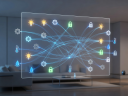
The Car as a Node on the Network
Historically, the driveway represented a hard boundary between the digital ecosystems of the home and the vehicle. Drivers would pull into their garage, exit their disconnected car, and only then re-enter their automated living space. Today, AI-powered personal assistants are erasing this boundary, treating the vehicle as a high-speed, mobile node on the broader Internet of Things (IoT) network.
By bridging the gap between automotive operating systems and major smart home platforms, drivers can now command their home environment from the highway, and vice versa. This integration transforms the commute into an extension of the living space.
Geofencing and Automation Triggers
The true power of an integrated AI assistant lies in automated, context-aware actions. Rather than relying solely on voice commands (e.g., "Turn on the porch lights"), the car utilizes GPS and geofencing to trigger complex routines based on proximity.
For example, a "Heading Home" protocol can be initiated when the vehicle crosses a virtual perimeter three miles from the house. The in-car AI seamlessly communicates with the home network to:
- Adjust the smart thermostat to the preferred temperature.
- Illuminate the driveway and exterior lights if it is after sunset.
- Disarm the perimeter security system and unlock the garage door.
- Preheat the oven or activate kitchen appliances.
Bi-Directional Communication
Integration is not a one-way street. The connection allows the home to communicate back to the driver. If a smart security camera detects motion at the back door while the homeowner is driving, the vehicle's AI assistant can alert the driver audibly and pull the live video feed directly onto the dashboard display (provided the vehicle is parked or in a safe automated driving mode).
Similarly, from the kitchen, a user can ask their smart speaker to start the car, activate the defrosters, and check the remaining EV range before they even step outside into the winter cold.
Security and Interoperability Challenges
Fusing the automotive and domestic networks introduces significant challenges. Chief among them is cybersecurity. A compromised smart home network could theoretical grant malicious actors access to vehicle controls, and a breached car could serve as a backdoor into home security systems. Manufacturers are mitigating these risks by enforcing end-to-end encryption, requiring multi-factor authentication, and keeping critical driving systems isolated from infotainment networks.
Interoperability remains another hurdle. With fragmented smart home ecosystems, automotive AI must act as a universal translator, supporting multiple protocols simultaneously to ensure broad compatibility regardless of the user's home setup.
The Future of the Commute
As vehicles become more autonomous, the integration of smart home features will only deepen. The car cabin is evolving into a mobile extension of the living room or home office. By maintaining a continuous, intelligent link between these spaces, AI assistants are smoothing the friction of daily transitions, allowing users to move fluidly through their day without ever disconnecting from their digital environments.